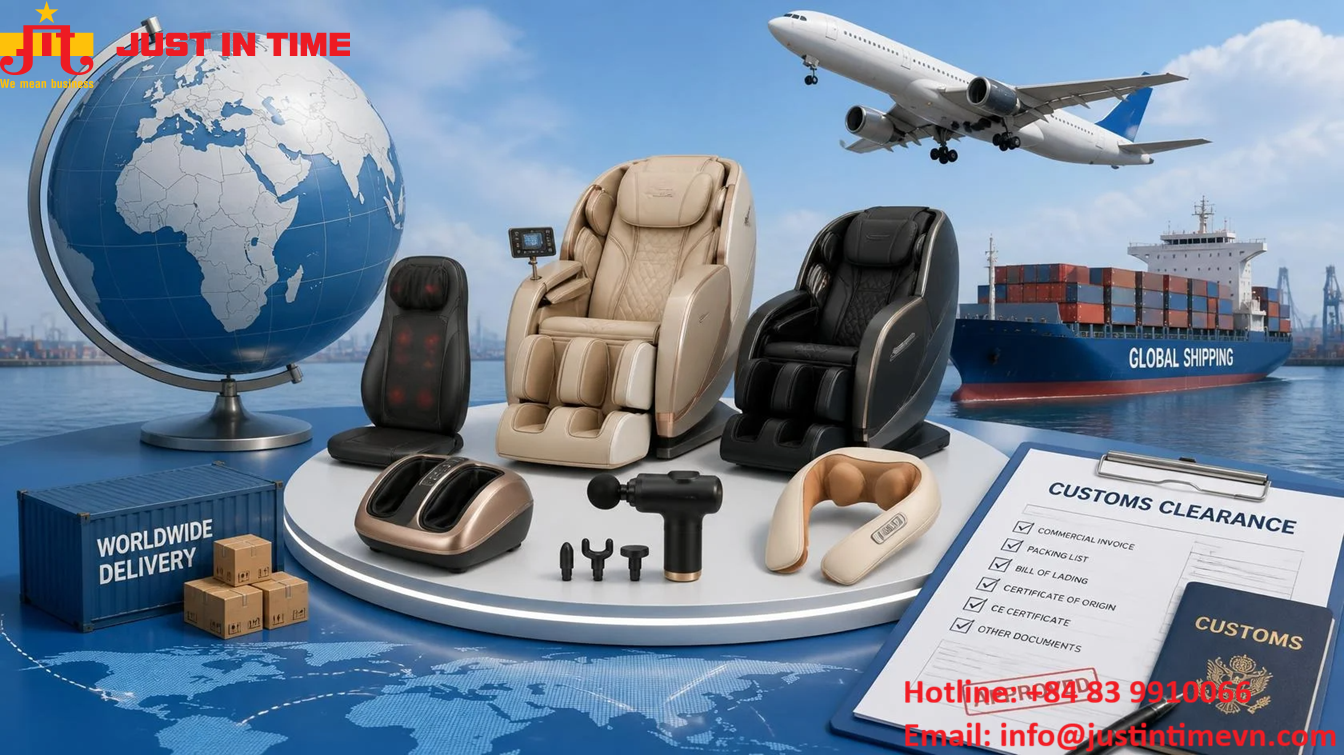
1. Product Overview and Import Policy
Common types of massage machines include:
-
Handheld massagers
-
Massage guns
-
Neck and shoulder massagers
-
Foot massagers
-
Eye massagers
-
Head massagers
-
Abdominal massage belts
-
Massage pillows
-
Massage cushions and mattresses
-
Full-body massage chairs
-
Electrical pulse massagers
-
Massagers with heating functions
-
Therapeutic massage equipment used in medical facilities
Massage machines intended for ordinary relaxation and body care are generally considered electrical or consumer massage equipment.
Where the manufacturer declares that the product is intended for diagnosis, treatment, rehabilitation, pain relief, or support in treating a medical condition, the product may fall within the scope of medical device regulations.
Before importing, businesses should check:
-
Principal intended use
-
Massage mechanism
-
Components that act on the body
-
Whether the product is intended for relaxation or therapy
-
Whether the product is considered a medical device
-
Medical device classification result, where applicable
-
Applicable declaration or circulation registration number
-
Power capacity and voltage
-
Heating or electrical pulse functions
-
Product labeling requirements
-
HS classification and tax obligations
2. HS Codes for Massage Machines
2.1 Reference HS Codes
Massage machines are generally considered under heading 9019, which covers massage apparatus and mechano-therapy appliances.
Reference HS codes include:
-
9019.10.10: Electrically operated vibratory massage apparatus
-
9019.10.90: Other mechano-therapy appliances, massage apparatus, and psychological aptitude-testing apparatus
The correct code depends on the product’s actual construction and operating principle.
HS code 9019.10.10 may be considered for:
-
Handheld vibratory massagers
-
Electric massage guns
-
Vibratory massage pillows
-
Vibratory massage cushions
-
Electric foot massagers using vibration
-
Electric massage devices whose principal function is vibration
HS code 9019.10.90 may need to be considered for:
-
Massage equipment not operating mainly through electrical vibration
-
Mechanical massage machines
-
Devices using rollers or airbags
-
Manually operated massage tools
-
Certain other mechano-therapy appliances
These codes are provided for reference only. Businesses should not apply one HS code to every product commercially described as a massage machine.
2.2 Products Requiring Separate Consideration
Different HS codes may apply to:
-
Full-body massage chairs
-
Electrical pulse massagers
-
Electro-acupuncture machines
-
Nerve or muscle stimulation devices
-
Ultrasonic massage equipment
-
Heat therapy equipment
-
Massage equipment incorporating infrared radiation
-
Skincare or beauty-treatment devices
-
Rehabilitation exercise equipment
-
Parts and accessories imported separately
For example, a device that uses electrical impulses to stimulate muscles or nerves may need to be considered under a heading for electro-medical therapy equipment rather than ordinary massage apparatus.
2.3 How to Determine the Correct HS Code
The correct HS code should be determined based on:
-
Product construction
-
Principal function
-
Operating principle
-
Vibration-generating method
-
Type of motor
-
Vibration speed
-
Vibration amplitude
-
Applied force
-
Roller system
-
Airbag system
-
Heating function
-
Electrical pulse function
-
Intended use
-
Body area being massaged
-
Intended users
-
Power capacity
-
Product catalog
-
Technical documents
-
Instructions for use
-
Medical device classification result, where applicable
For multifunctional equipment, the importer should identify the principal function that gives the product its essential character.
3. Import Duties and VAT
The taxes that may apply when importing massage machines include:
-
Import duty
-
Value-added tax
The applicable rates depend on:
-
HS code accepted by customs
-
Country of origin
-
Tariff schedule effective on the customs declaration date
-
Certificate or proof of origin
-
Eligibility for special preferential tariff treatment
Where the goods originate from a country or territory that has a free trade agreement with Vietnam, a special preferential import duty rate may apply if the applicable rules of origin are satisfied and valid origin documentation is available.
Common certificates or proofs of origin may include:
-
C/O Form E
-
C/O Form D
-
C/O Form AK
-
C/O Form AJ
-
C/O Form VJ
-
C/O Form VK
-
CPTPP C/O
-
EVFTA proof of origin
-
RCEP C/O
VAT should be determined according to the HS code, product function, medical device documentation, and tax regulations effective when the customs declaration is registered.
Reference tax calculation formulas:
Import duty = Customs value × Import duty rate
VAT = (Customs value + Import duty) × VAT rate
Importers should not automatically apply the tax rate used for previous shipments without reviewing the current HS classification and tax policy.
** See more Import Procedures for Handheld Massagers
4. Import Documentation
The standard customs documentation normally includes:
-
Customs declaration
-
Commercial Invoice
-
Packing List
-
Sales Contract
-
Bill of Lading or Air Waybill
-
Certificate of Origin, if available
-
Product catalog
-
Technical documents
-
Instructions for use
For massage machines regulated as medical devices, the importer may also need:
-
Medical device classification result
-
Applicable declaration or circulation registration number
-
Authorization letter from the medical device owner
-
Certificate of Free Sale, where applicable
-
Manufacturer’s quality management system certificate
-
Medical device technical dossier
-
Vietnamese instructions for use
-
Warranty documentation
-
Original product label
-
Proposed Vietnamese supplementary label
-
Safety documents and operating warnings
Information across the documents should be consistent regarding:
-
Product name
-
Model
-
Brand
-
Manufacturer
-
Country of manufacture
-
Intended use
-
Operating principle
-
Power capacity
-
Voltage
-
Frequency
-
Included accessories
5. Massage Machine Import Process
Step 1: Determine the Product Type and Intended Use
The importer should determine whether the product is a relaxation massager, therapeutic massager, vibratory massager, air-compression massager, roller massager, or electrical pulse device.
Step 2: Review Medical Device Requirements
Where the product is marketed for treatment, rehabilitation, pain relief, or support in reducing medical symptoms, the importer should verify the medical device classification and circulation documentation.
The word “massage” in the commercial product name is not sufficient by itself to determine whether the product is a medical device. The determination should be based on the intended use declared by the manufacturer or medical device owner, together with the applicable risk-classification rules.
Step 3: Determine the HS Code
The HS code should be selected based on the product’s construction, principal function, vibration mechanism, rollers, airbags, electrical impulses, heating system, and technical documents.
Step 4: Check Import Duties and C/O
The importer should review the applicable import duty, VAT, and eligibility for special preferential tariff treatment based on the country of origin.
Step 5: Check the Product Label
The supplier should provide clear photographs of the original product label before shipment.
The label should show:
-
Product name
-
Model
-
Manufacturer
-
Country of origin
-
Power capacity
-
Voltage
-
Frequency
Step 6: Prepare the Import Documents
The importer should verify the consistency of the Commercial Invoice, Packing List, transport document, C/O, product catalog, technical documents, and product label.
Step 7: Submit the Customs Declaration
The customs declaration is submitted through the VNACCS system. The product description should clearly state the product name, intended use, massage mechanism, model, power, voltage, manufacturer, and origin.
A reference description for a vibratory massager may be:
“Electrically operated vibratory body massager, model…, power…, voltage…, brand…, manufacturer…, 100% new.”
A reference description for a foot massager may be:
“Electric foot massager using rollers and airbags, with heating function…, model…, power…, voltage…, brand…, manufacturer…, 100% new.”
The customs description should be adjusted according to the product’s actual construction and specifications.
Step 8: Submit Documents and Cooperate with Customs Inspection
Depending on the customs channel, the importer may submit an electronic dossier or cooperate with a physical inspection.
Customs may request additional documents such as:
-
Product catalog
-
Technical documents
-
Product photographs
-
Operating video
-
Product construction diagram
-
Functional description
-
Medical device documentation, where applicable
Step 9: Pay Taxes and Complete Customs Clearance
After fulfilling tax obligations and applicable regulatory requirements, the importer may complete customs clearance and collect the goods.
Step 10: Apply a Vietnamese Supplementary Label
Before the product is placed on the Vietnamese market, a Vietnamese supplementary label must be applied if the original label does not contain all mandatory information in Vietnamese.
6. Important Notes When Importing Massage Machines
Importers should pay attention to the following:
-
Do not determine the HS code based only on the commercial product name
-
Distinguish relaxation massagers from therapeutic equipment
-
Identify the principal function of multifunctional devices
-
Review the vibration, roller, or airbag mechanism
-
Check the electrical pulse function
-
Check the heating function
-
Verify the power capacity and voltage
-
Check lithium battery specifications, where applicable
-
Check the power adapter and plug type
-
Review the automatic shut-off function
-
Review overheat protection
-
Check massage-force limitations
-
Avoid using a vague customs description such as “healthcare machine”
-
Determine separate HS codes for accessories imported independently
-
Prepare technical documents before the goods arrive in Vietnam
Common accessories may include:
-
Massage heads
-
Power cord
-
Power adapter
-
Rechargeable battery
-
Battery charger
-
Remote control
-
Carrying case
-
Fixing strap
-
Cushion pad
-
Roller components
-
Airbag components
Accessories imported separately may have different HS codes and regulatory requirements from the complete machine.
Lithium Battery Requirements
For massage machines using lithium batteries, importers should check:
-
Battery type
-
Battery capacity
-
Battery voltage
-
Whether the battery is installed in the device or packed separately
-
UN38.3 test report
-
Material Safety Data Sheet
-
Packaging requirements
-
Air or sea transport conditions
Carriers and airlines may request battery documentation before accepting the shipment.
Labeling Requirements
The product label should include:
-
Product name
-
Brand
-
Model
-
Manufacturer
-
Manufacturer’s address
-
Country of origin
-
Power capacity
-
Voltage
-
Frequency
-
Battery type, where applicable
-
Massage method
-
Massage speed or intensity levels
-
Recommended operating time
-
Safety warnings
-
Storage conditions
The Vietnamese supplementary label should provide the name and address of the entity responsible for the product in Vietnam, intended use, instructions for use, persons who should not use the device, and relevant safety warnings.
** See more Robot Vacuum Cleaner Import Procedures
7. Massage Machine Import Services
A customs and logistics service provider may support importers with:
-
Import policy review
-
Analysis of product construction and functions
-
Review of medical device requirements
-
Reference HS code consultation
-
Import duty and VAT review
-
C/O verification
-
Review of the Commercial Invoice and Packing List
-
Product catalog review
-
Technical document review
-
Product label review
-
Preparation of customs documentation
-
Customs declaration
-
Coordination of physical inspection
-
Customs clearance
-
Delivery to the importer’s warehouse
Reviewing the intended use, operating principle, and technical documents before placing the order can reduce disputes regarding HS classification and medical device policy after the goods arrive in Vietnam.
8. FAQ – Frequently Asked Questions
8.1 Is an Import License Required for Massage Machines?
Ordinary relaxation massage machines generally do not require a separate import license. However, products marketed for treatment or rehabilitation should be reviewed under medical device regulations.
8.2 Is a Massage Machine Considered a Medical Device?
Not every massage machine is a medical device. The determination depends on the intended use declared by the manufacturer, operating principle, product functions, and risk level.
8.3 What Is the HS Code for a Massage Machine?
Reference HS codes include:
-
9019.10.10: Electrically operated vibratory massage apparatus
-
9019.10.90: Other massage apparatus or mechano-therapy appliances
The final HS code must be determined according to the product’s actual construction and principal function.
8.4 Can a Massage Chair Be Classified Under HS Code 9019.10.10?
This code may be considered where the massage chair’s principal function is electrically operated vibration. However, if the chair mainly operates through rollers, airbags, or combined mechanisms, the catalog and construction should be reviewed carefully before determining the HS code.
8.5 What Is the Import Duty on Massage Machines?
The applicable import duty depends on the HS code, country of origin, and origin documentation effective when the customs declaration is registered.
8.6 Is a Product Catalog Required?
Yes. A product catalog helps customs verify the principal function, massage mechanism, construction, power capacity, and HS classification.
8.7 Is Battery Documentation Required for Cordless Massagers?
It may be required. Carriers commonly request an MSDS, UN38.3 test report, and packaging information for equipment containing lithium batteries.
9. Conclusion
Massage machine import procedures depend on the construction, operating principle, and intended use of each product. Electrically operated vibratory massage equipment may be considered under reference HS code 9019.10.10, while mechanical massage equipment or devices using other technologies may need to be considered under HS code 9019.10.90 or another appropriate heading.
Where a massage machine is marketed for treatment, pain relief, or rehabilitation, the importer should also review the applicable medical device regulations.
The final HS code must be determined based on the product’s construction, principal function, vibration mechanism, roller or airbag system, heating or electrical pulse functions, power capacity, intended use, catalog, and technical documents for each specific model.
If you have difficulties when clearing customs, you can choose Just In Time as a companion.
Just In Time's staff is always enthusiastic to support you to handle your work quickly and professionally.
JUST IN TIME JOINT STOCK COMPANY
Address: No. 5, Dong Da, Tan Son Hoa Ward, Ho Chi Minh City.
Hotline: +84 83 9910066
Email: info@justintimevn.com
Facebook: https://www.facebook.com/justintimevn
** See more Electric Toothbrush Import Procedures