Air cargo transport is expected to grow by double digits in 2026
Entering 2026, the Civil Aviation Authority of Vietnam (CAAV) assesses that this will be a year with many growth drivers for the aviation industry.
The CAAV has also issued a document proposing targets for air transport in 2026 to increase by 13% in passenger volume and 15% in cargo volume compared to 2025, equivalent to 95 million passengers and 1.6 million tons of cargo, according to the Government Portal.
According to analysis from the CAAV, the GDP growth target for 2026 of 10% or more (approved by the National Assembly) will create an important macroeconomic boost for the aviation industry.
From within the industry, the implementation of the new Civil Aviation Law and newly issued policies and regulations will create significant convenience and actively support the development of the aviation transport market.
In addition, strategic infrastructure projects such as Long Thanh International Airport coming into operation, and Gia Binh and Phu Quoc International Airports being accelerated, will create the physical foundation to enhance operational capacity...
According to CAAV estimates, Vietnam’s air transport market in 2025 will reach around 84 million passengers and 1.4 million tons of cargo, corresponding to increases of over 11% in passengers and 18% in cargo compared to 2024.
As of the end of November, the total passenger market reached more than 69 million passengers, achieving about 82.1% of the plan and increasing nearly 11% year-on-year. For cargo transport, the total market reached more than 1 million tons of cargo, over 71% of the plan and up more than 18% compared to the same period in 2024.
Of this, domestic transport reached nearly 31 million passengers and nearly 187 thousand tons of cargo, increasing by over 7% in passengers and roughly the same in cargo year-on-year.
International transport reached more than 38 million passengers and over 1 million tons of cargo, rising by over 13% in passengers and nearly 23% in cargo compared to the same period in 2024.
Speaking with us, Vietnam Airlines CEO Le Hong Ha forecast that this year, aviation and tourism will grow by double digits, including both international and domestic markets. Among them, international passengers traveling to Vietnam by air will grow by 14–15%, while domestic tourism will maintain a growth rate of 7–8%.
He assessed that this growth momentum will continue into 2026. According to him, this result is thanks to the efforts of the aviation and tourism industries and Government policies, from promoting destinations, designing new tourism products, to “opening up” visa policies to a range of European countries.
The Vietnam Airlines executive believes these policies will create opportunities not only for the year-end period but also for the coming years.
In addition, tourism is an industry that spreads its impact to other economic sectors. Vietnam has been leveraging this potential to become an attractive destination, contributing significantly to overall economic growth goals.
Unpredictable fluctuations of exchange rates and fuel prices
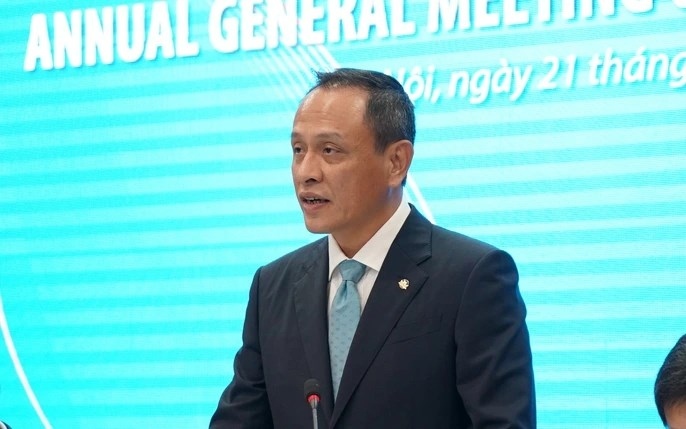
Vietnam Airlines CEO Le Hong Ha. (Photo: VNA).
Despite optimism regarding growth figures, the CAAV also notes the need to monitor risks arising from political, economic, trade, military conflicts, and religious issues.
At the same time, unpredictable developments in fuel prices, exchange rates, and interest rates will also be variables impacting airlines’ operations and the air transport market in the coming year.
Sharing the same view, the Vietnam Airlines CEO also highlighted major challenges facing the aviation industry. First are factors beyond the industry’s control such as exchange rates and fuel prices.
“If armed conflicts break out in certain regions, fuel prices will certainly rise,” Mr. Ha said.
Additionally, supply chain disruptions, shortages of spare parts, or incidents in which major aircraft manufacturers like Boeing or Airbus recall aircraft for repairs pose significant challenges for the global aviation industry as well as Vietnam’s aviation sector.
Currently, Vietnamese airlines still lack aircraft; some must send aircraft out for repairs and it takes a long time for them to return to service. This limits airlines’ growth potential.
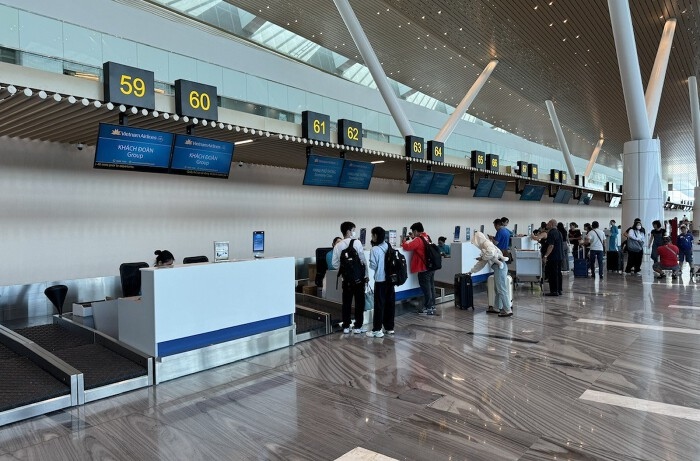
Terminal T3 has been put into operation to reduce overload at Tan Son Nhat Airport. (Photo: H.A).
Insufficient airport infrastructure
Besides external difficulties, another issue for Vietnam’s aviation industry is insufficient infrastructure and overloaded airports.
According to Assoc. Prof. Dr. Tran Dinh Thien, Vietnam has 22 civil airports, but capacity utilization remains low. Only 3–4 airports such as Tan Son Nhat, Noi Bai, Da Nang, and recently Phu Quoc, operate at 100–150% capacity—considered among the busiest in the world.
However, the concentration of traffic at a few key airports also leads to overload and inefficient operations.
To build a solid foundation for the aviation industry’s development in 2026 and the long term, the CAAV recommends that the Ministry of Construction and relevant authorities focus on supporting investment in expanding aviation infrastructure, especially major international airports, to completely resolve overload and reduce logistics costs.
They also propose preferential policies on taxes, fees, and credit interest rates for Vietnamese airlines to continue implementing restructuring processes for sustainable recovery and development.
At the same time, they suggest continuing to implement and expand preferential policies on visas and residence, and developing national and local tourism attraction strategies to stimulate tourism demand and enhance Vietnam’s appeal to both domestic and international travelers.
The specialized management agency also recommends accelerating amendments to legal regulations related to aviation safety assurance.
In addition, priority should be given to investing in upgrading CNS/ATM equipment, meteorological monitoring systems, and early warning systems; directing localities to strictly control airspace, laser lights, UAVs, and coordinate in handling threats to aviation safety. Finally, supporting the promotion of digital technology and big data analytics in safety oversight across the entire sector.